Q4 2025 and Annual Market Review
US stocks notched their third year in a row of double-digit gains, but it wasn’t the smoothest ride.
KEY TAKEAWAYS
- US stocks continued climbing in 2025, with the S&P 500 gaining almost 18%, while international stocks soared nearly 32%.
- The Fed reduced interest rates by 0.75 percentage points even as it coped with stubborn inflation, citing labor market worries.
- Value lagged growth in the US, but international small value was among the best-performing asset classes of the year.
US stocks notched their third year in a row of double-digit gains, but it wasn’t the smoothest ride. The S&P 500 hit records in the winter that were followed by a spring swoon. After powering past that to new highs in the fall, the markets cooled a bit along with the temperatures.1 Still, the S&P 500 was up 17.9% for the year and closed near record levels.2 The climb came despite tariff uncertainty, interest rate changes, and concerns about the durability of AI’s gains—not to mention the longest government shutdown in US history.3 Global stocks rose (see Exhibit 1), with returns in developed international and emerging markets better than those in the US. In the bond market, US Treasuries were higher for the year, and the benchmark 10-year yield fell to just above 4%.4
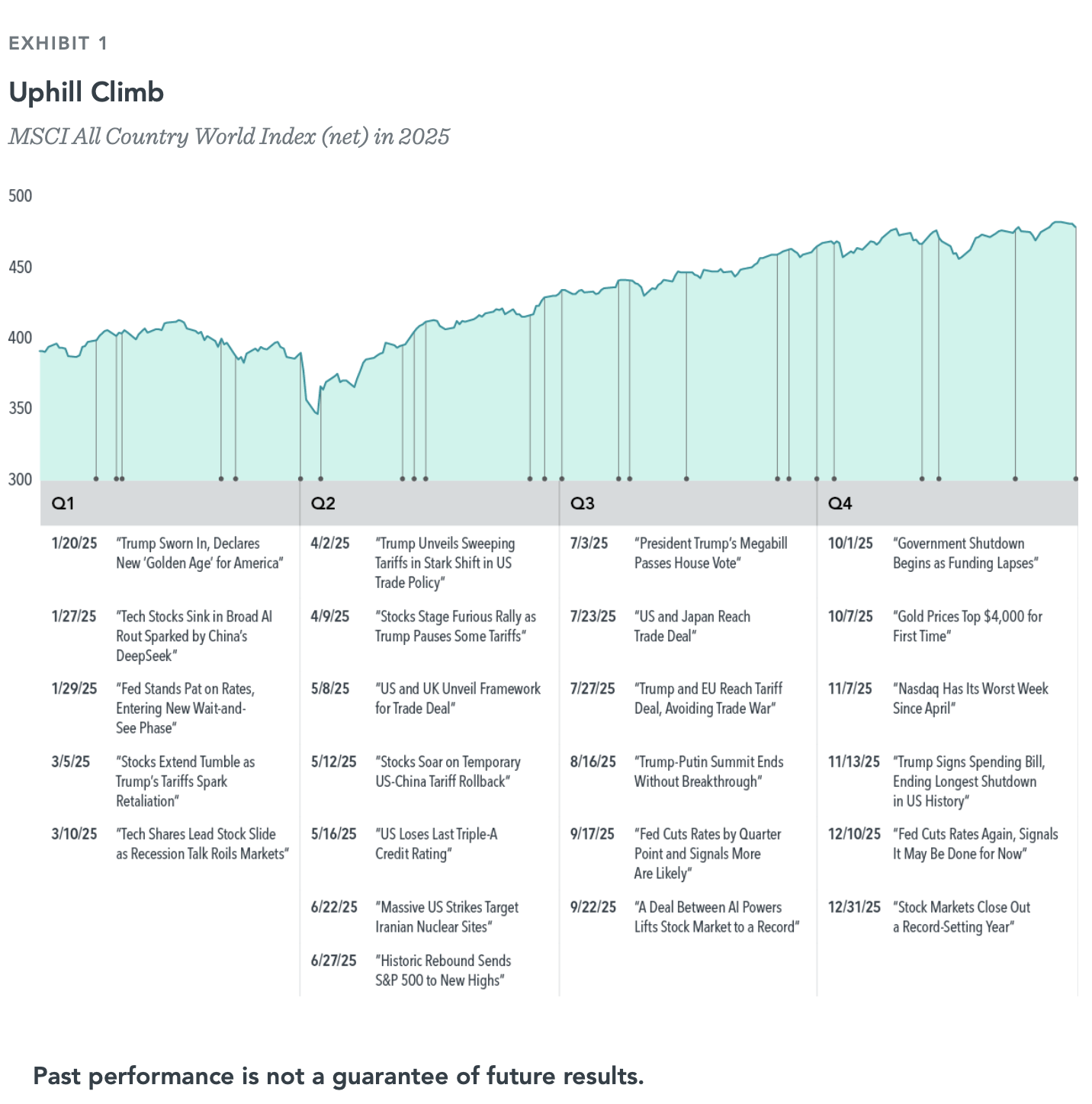
In a departure from recent years, developed international stocks fared better than their US counterparts. The MSCI World ex USA Index gained 31.9%, outpacing the S&P 500 by the widest margin since 1993 and serving as a reminder of the potential benefits of an internationally diversified portfolio. Emerging markets fared even better than developed markets, with the MSCI Emerging Markets Index rising 33.6%. Global equities, as measured by the MSCI All Country World Index, rose 22.3% for the year.1
In the bond market, US Treasuries returned 6.3%, sending the yield on the benchmark 10-year Treasury down to 4.18%.12 The broader bond market also posted gains during the year, with the Bloomberg US Aggregate Bond Index up 7.3%, its best annual return since 2020. The Bloomberg Global Aggregate Bond Index (hedged to USD)—a broad benchmark of sovereign and corporate debt—rose 4.9% for the year.13
Mind over Matters
A better way to cope with market volatility may be to simply pay less attention. Just this past year, if you had gone to sleep on April Fools’ Day and checked your investment portfolio a month later, you might have assumed the market had been relatively calm. But for investors who spent the month tracking daily returns, the experience likely felt more disruptive. April 2025 turned out to be one of the most volatile months in recent history, as market participants were processing new information about tariffs and trying to make sense of what the developments might mean for businesses, investors, and the global economy.
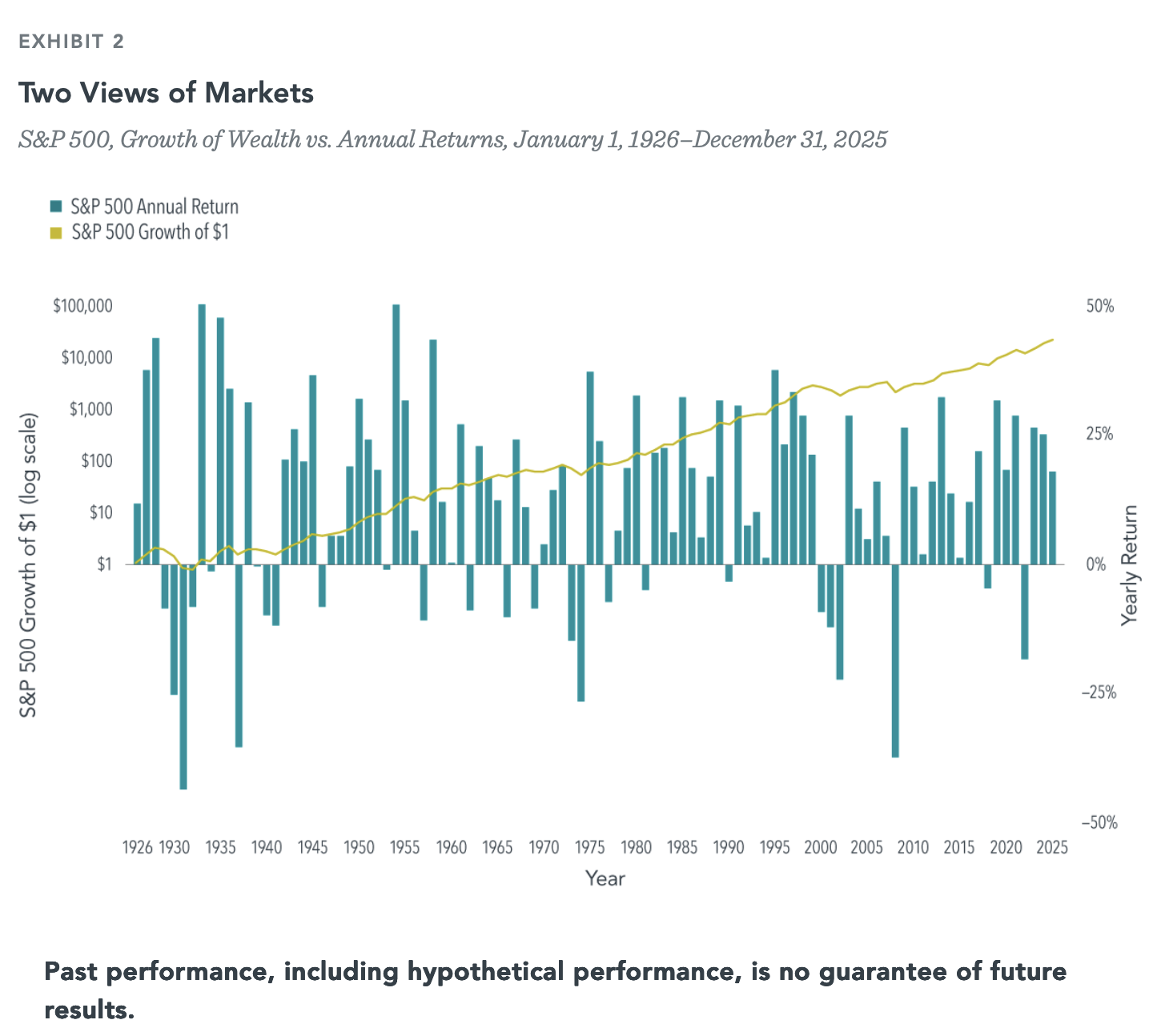
The same thinking can guide investors’ approach over longer time periods—especially when looking at data across many years or even decades. With reliable stock data stretching back to 1926, we are, as of this year, now able to consider a full century of stock returns. Doing so gives further credence to the merits of focusing on the long run. A short-term view of yearly gains and losses shows what may appear as wild swings in the market, as seen in Exhibit 2, but a long-term view reveals a fairly steady growth of wealth over the 100-year period.